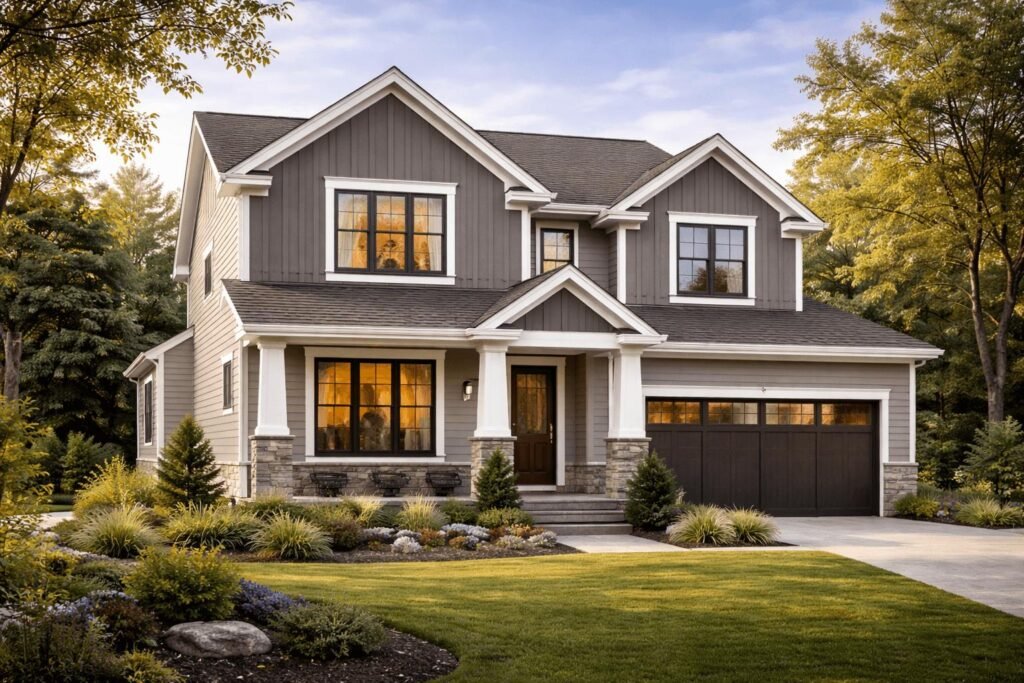
Your home’s exterior siding does more than improve its appearance. It helps protect the walls against moisture, wind, snow, and everyday weather exposure. In Calgary, where temperatures can change dramatically and exterior materials face demanding seasonal conditions, choosing suitable siding is an important home improvement decision.
Perhaps your existing siding has started cracking, fading, warping, or pulling away from the wall. Maybe you’ve noticed woodpecker damage, moisture stains, or rising maintenance costs. Or you may simply want to update your home’s exterior without committing to a material that needs frequent repainting or repairs.
For homeowners considering Hardie Board installation, fibre cement siding offers an option worth exploring. Known for its durability, architectural appearance, and relatively low maintenance requirements, James Hardie siding is designed to provide long-term exterior protection when properly installed.
But is it the right choice for your Calgary home? How much does installation cost? Can it handle freezing temperatures and hailstorms? And what should you expect when replacing old siding?
This guide answers those questions and explains the important considerations before investing in Hardie Board siding in Calgary.
1. What Is Hardie Board Siding?
Hardie Board is a commonly used name for fibre cement siding manufactured by James Hardie.
Fibre cement is a composite building material made primarily from cement, cellulose fibres, sand, and other ingredients. It is manufactured into exterior siding boards or panels designed to provide a durable protective cladding.
Unlike traditional wood siding, fibre cement does not rely on natural timber as its main structural material. It also behaves differently from vinyl, which can expand and contract more noticeably with temperature changes.
Common types of James Hardie siding
HardiePlank lap siding: Horizontal overlapping boards that create a traditional residential appearance. These are commonly selected for detached homes and renovation projects.
HardiePanel vertical siding: Larger vertical panels that can create a modern architectural look. They may be paired with battens for a board-and-batten design.
HardieShingle siding: Shingle-style cladding that can provide a traditional appearance on gables and selected exterior walls.
HardieTrim boards: Coordinating trim products for windows, doors, corners, and other architectural details.
The most suitable combination depends on your home’s design, existing wall structure, budget, and desired finish.
2. Why Calgary Homeowners Consider Hardie Board Installation
Calgary’s climate is one of the main reasons homeowners pay attention to siding durability.
Exterior walls are exposed to freezing temperatures, snow, wind-driven rain, hail, strong sunlight, and repeated seasonal changes. These conditions can reveal weaknesses in aging siding or poorly installed exterior wall systems.
Protection against moisture and snow
Moisture can enter behind exterior siding when flashing, joints, penetrations, or water-management components are incorrectly installed.
Fibre cement siding is designed to resist common weather exposure, but it is not a waterproof barrier on its own.
The complete wall system needs appropriate weather-resistive barriers, flashing, drainage details, and correctly installed siding.
Performance during freeze-thaw conditions
Water that enters vulnerable wall assemblies can freeze and expand during cold weather.
Over time, repeated freeze-thaw cycles may contribute to deterioration of improperly protected building materials.
James Hardie offers climate-specific product systems, including products designed for cold climates. The correct product and installation requirements should be confirmed for the Calgary project.
Reduced concerns about insects and woodpeckers
Wood siding can sometimes attract insects or be damaged by woodpeckers.
Fibre cement is not a food source for termites and generally offers greater resistance to woodpecker damage than natural wood siding.
However, no exterior material should be described as completely damage-proof.
If woodpeckers are repeatedly damaging your home’s exterior, it is important to investigate the underlying cause before replacing the siding.
Exterior Home Repairs also lists woodpecker damage repair among its exterior repair services in Calgary.
Noncombustible cladding material
James Hardie fibre cement siding is classified as noncombustible under applicable material testing standards.
That does not mean an entire house becomes fireproof. Windows, roof components, wall assemblies, finishes, and surrounding conditions still influence fire performance.
3. Signs Your Existing Siding May Need Replacement
Before investing in Hardie Board Calgary homeowners should evaluate whether their current siding needs a complete replacement or targeted repairs.
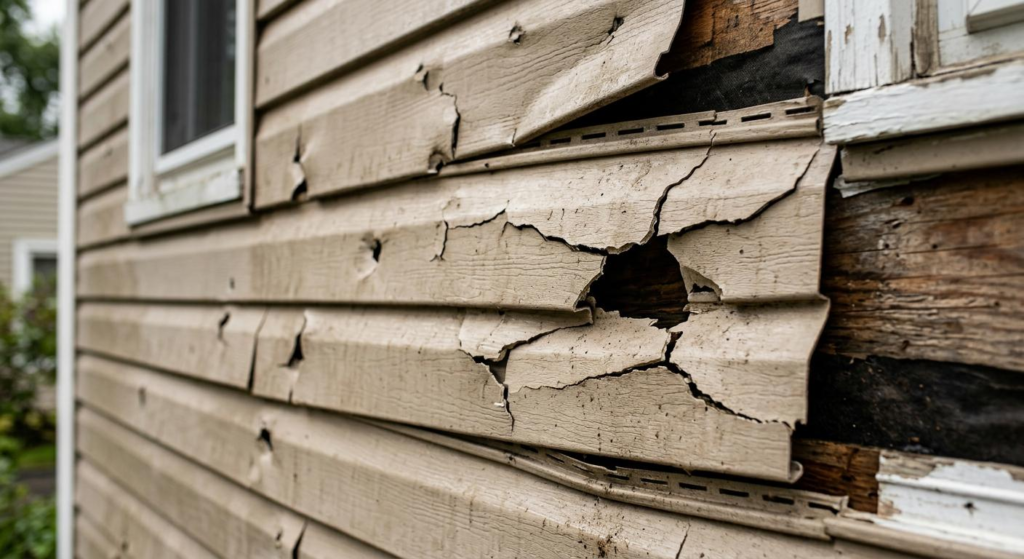
Cracked or broken siding boards
Cracks can allow water to reach vulnerable parts of the exterior wall.
Small isolated damage may be repairable, depending on the material and its condition. Widespread cracking can indicate more extensive deterioration.
Warping or loose siding
Siding that is pulling away from the wall may have failed fasteners, installation defects, moisture problems, or movement in the underlying structure.
The cause should be identified before new siding is installed.
Water stains or interior moisture
Moisture stains near windows, doors, or exterior walls can indicate problems with flashing, drainage, siding joints, or other building components.
Simply covering the affected wall with new siding may conceal an unresolved moisture problem.
Repeated painting and maintenance
If your current siding requires frequent scraping, painting, or replacement of deteriorated boards, switching to a lower-maintenance material may be worth considering.
Hail or impact damage
Calgary hailstorms can damage different siding materials.
Some impacts cause visible cracks or dents, while others may affect the wall’s protective components.
The extent of damage should be professionally assessed before deciding on repairs or full replacement.
Fading and poor curb appeal
Fading alone does not necessarily mean siding has failed.
However, when appearance problems occur alongside cracks, moisture issues, or repeated repairs, replacement may become more attractive.
4. Hardie Board vs. Vinyl vs. Wood Siding: Which Is Better?
Homeowners often compare fibre cement siding with vinyl and natural wood before making a decision.
| Feature | Hardie Board / fibre cement | Vinyl siding | Wood siding |
|---|---|---|---|
| Upfront cost | Higher | Generally lower | Varies, often higher |
| Maintenance | Relatively low | Relatively low | Usually higher |
| Appearance | Wood-look and modern options | Wide range of styles | Natural wood appearance |
| Fire performance | Noncombustible material | Combustible material | Combustible material |
| Insect resistance | Strong | Strong | Depends on treatment and condition |
| Painting | Depends on finish | Usually not required | Often periodic |
| Installation | Requires specialized handling | Generally lighter | Depends on wood system |
| Weather durability | Strong when properly installed | Product-dependent | Requires careful upkeep |
When Hardie Board may be the better choice
Fibre cement may suit homeowners who want a durable exterior, prefer a painted wood-style appearance, and are prepared to invest more upfront for a lower-maintenance cladding option.
When vinyl siding may be more suitable
Vinyl can be attractive for projects where initial budget is the main priority.
It is lightweight, available in many colours, and commonly used for residential exteriors.
When wood siding may be preferred
Natural wood can offer distinctive architectural character, especially on heritage or custom-designed homes.
However, it generally requires more maintenance to manage weathering, moisture exposure, and surface finishes.
The best material is not necessarily the most expensive one. It is the material that matches your budget, building design, maintenance expectations, and long-term plans.
5. How Much Does Hardie Board Installation Cost in Calgary?
Hardie Board installation typically costs more upfront than basic vinyl siding because of material pricing, weight, specialized cutting requirements, and installation labour.
However, the total cost depends on the specific property and scope of work.
Rather than relying on a generic price per square foot, homeowners should request a detailed estimate based on actual wall measurements and existing conditions.
Factors that affect installation costs
Total siding area: Larger wall areas require more materials and labour. The home’s interior floor area is not a reliable substitute for exterior wall measurements.
Existing siding removal: Removing old siding, transporting debris, and disposing of materials add to the project cost.
Wall repairs: Hidden water damage, deteriorated sheathing, or damaged framing may need to be corrected before installation.
Siding style: Horizontal lap siding, vertical panels, board-and-batten designs, and decorative accents can have different installation requirements.
Trim and finishing: Window trim, corner boards, soffits, and other architectural details affect the final quotation.
Building height and accessibility: Multi-storey homes may require scaffolding, additional safety measures, or specialized access equipment.
Painted or factory-finished materials: The selected finish affects both upfront costs and future maintenance.
What should a Hardie Board installation quote include?
Ask the contractor to clearly identify the siding product, material quantities, removal work, wall preparation, moisture-management components, flashing, fasteners, trim, finishing, cleanup, warranties, and applicable taxes.
A low initial quotation may not be the most economical choice if important installation components are excluded.
6. The Hardie Board Installation Process: Step by Step
Proper installation is essential to the long-term performance of fibre cement siding.
The following overview explains what homeowners can generally expect. It is not a substitute for the manufacturer’s current installation instructions.
Step 1: Exterior inspection and measurements
The contractor evaluates the existing siding, wall condition, openings, corners, and other exterior details.
Measurements help determine the material quantity and installation scope.
Step 2: Removal of existing siding
If the project involves replacement, the old siding is removed where required.
The exposed wall is inspected for moisture damage, deteriorated sheathing, and other problems that need correction.
Step 3: Wall preparation and moisture protection
The installer prepares the wall assembly and installs or repairs required weather-resistive barriers, flashing, and drainage components.
Particular attention is needed around windows, doors, roof-to-wall intersections, and penetrations.
Step 4: Layout and material preparation
The siding layout is planned to achieve consistent board alignment and appropriate transitions.
Fibre cement cutting can generate respirable crystalline silica dust. Installers must follow current safety requirements and manufacturer-approved cutting and dust-control procedures.
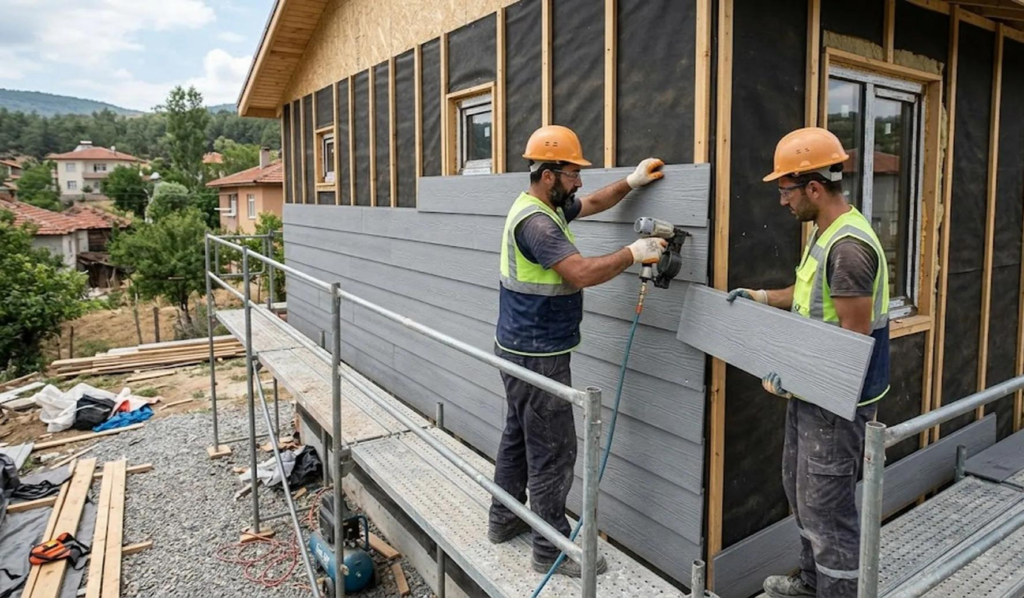
Step 5: Siding installation
The boards or panels are fastened according to the selected product’s installation instructions.
Correct fastener type, spacing, placement, clearances, and flashing are essential.
For example, James Hardie’s technical guidance specifies clearances around the ground, decks, roofing, and horizontal flashing. These requirements can vary by product and country, so installers must follow the current Canadian instructions applicable to the job.
cdnassets.hw.net
+1
Step 6: Trim, joints, and finishing
Window trim, corners, joints, and other details are completed according to the manufacturer’s specifications.
Where painting is required, suitable coatings and finishing procedures should be used.
Step 7: Cleanup and final inspection
The contractor should inspect the finished work, remove debris, and review relevant warranty and maintenance information with the homeowner.
7. Common Hardie Board Installation Mistakes Homeowners Should Avoid
Even high-quality siding can develop problems if the installation is incorrect.
Incorrect clearance from the ground
Siding installed too close to soil, snow accumulation, or other wet surfaces may experience unnecessary moisture exposure.
The installer must maintain the clearances required by the specific product and applicable building standards.
Poor flashing around windows and doors
Flashing directs water away from vulnerable wall openings.
Missing or incorrectly installed flashing can allow water behind the siding, potentially causing damage that remains hidden for years.
Improper fasteners
Using unsuitable fasteners, incorrect spacing, or overdriving nails can compromise the installation.
Incorrect joint treatment
Different James Hardie products have specific requirements for joints, gaps, flashing, and sealants.
Caulking every visible gap is not necessarily correct. Some designed drainage gaps must remain open.
Installing new siding over unresolved damage
Replacing siding without repairing damaged sheathing or moisture problems can lead to repeated failures.
Homeowners should ask what inspection and repairs are included before new cladding is installed.
8. How Long Does Hardie Board Siding Last?
Fibre cement siding is intended as a long-term exterior cladding material.
James Hardie advertises a 30-year non-prorated limited substrate warranty on eligible siding products, subject to the specific warranty conditions. This is a warranty term, not a guarantee that every installation will remain maintenance-free or last exactly 30 years.
Actual performance depends on proper installation, drainage, exposure, finishing, and ongoing maintenance.
How to maintain fibre cement siding
Homeowners should periodically inspect the siding for damaged boards, deteriorating sealant where required, blocked drainage areas, and problems around windows or doors.
Keep vegetation away from the walls and avoid allowing landscaping or soil to cover required siding clearances.
For routine cleaning, use methods recommended by the manufacturer. James Hardie’s maintenance guidance favours gentle cleaning and warns that high-pressure washing can damage the siding.
If damage appears after a storm, arrange an assessment rather than attempting unsafe work at height.
9. Can Hardie Board Siding Be Installed During Calgary Winter?
Winter installation may be possible, but conditions must be evaluated carefully.
Snow, ice, strong winds, limited daylight, and low temperatures can affect site safety and installation scheduling.
Certain sealants, paints, and other finishing materials have temperature and moisture limitations.
A contractor should confirm that the planned materials and installation methods are suitable for the expected conditions.
For some projects, scheduling installation during milder weather may simplify the process. However, urgent repairs to exposed or damaged exterior walls should not necessarily be delayed.
10. Does Hardie Board Siding Improve Home Value?
New siding can improve the appearance and perceived condition of a property.
For homeowners planning to sell, an updated exterior may make the house more appealing to prospective buyers, particularly when the previous siding was visibly deteriorated.
However, the resale benefit depends on the neighbourhood, property condition, quality of installation, buyer preferences, and local market.
Hardie Board installation should therefore be evaluated as a combination of exterior protection, maintenance planning, aesthetics, and potential resale appeal—not as a guaranteed investment return.
11. How to Choose a Hardie Board Installation Contractor in Calgary
Because fibre cement installation involves specific handling, fastening, moisture-management, and finishing requirements, contractor selection matters.
Before hiring a contractor, ask:
- Have you installed the specific James Hardie product being proposed?
- Can you provide a written quotation identifying the materials and installation scope?
- How will you inspect and address hidden wall damage?
- What weather-resistive barrier and flashing details will be used?
- Will you follow the current Canadian manufacturer instructions?
- What workmanship warranty is provided?
- Can you provide relevant insurance and licensing information?
- How will you protect landscaping and clean the site after installation?
A contractor should be able to explain the recommended installation approach in language homeowners can understand.
For more information about the company’s exterior repair offerings, explore the Exterior Home Repairs services page.
12. Frequently Asked Questions About Hardie Board Calgary Installation
Is Hardie Board suitable for Calgary’s cold climate?
Yes, appropriately specified James Hardie fibre cement products can be suitable for cold-climate applications. Correct product selection, moisture management, flashing, clearances, and installation are essential.
Is Hardie Board better than vinyl siding?
Neither material is automatically better for every property. Fibre cement offers noncombustible cladding and a different appearance and durability profile, while vinyl generally has a lower initial cost. The best choice depends on budget and priorities.
Can Hardie Board be installed over existing siding?
This depends on the existing wall assembly, structural support, condition of the old siding, manufacturer requirements, and applicable building rules. Removing old siding may be necessary to inspect and repair hidden damage.
Does Hardie Board require painting?
Some products are factory-finished, while others are supplied primed for painting. Factory finishes still require maintenance, and repainting may eventually be necessary depending on the finish and exposure.
Can hail damage Hardie Board siding?
Yes. Fibre cement can resist many forms of everyday weather exposure, but sufficiently severe hail or other impacts may crack or damage the material. No siding should be considered completely hailproof.
Is Hardie Board waterproof?
No. Fibre cement siding is weather-resistant cladding, but it is not a substitute for the water-management components behind the siding.
How long does installation take?
The timeline depends on wall area, building height, weather, material availability, removal requirements, and hidden repairs. A contractor should provide a project-specific schedule after inspection.
Can individual Hardie Board planks be repaired or replaced?
In some cases, isolated damaged boards can be replaced without removing all the siding. The feasibility depends on access, the installation system, surrounding conditions, and availability of matching materials.
Does Hardie Board stop woodpecker damage?
Fibre cement is generally more resistant to woodpecker damage than natural wood. However, repeated bird activity may indicate insects or other underlying conditions that should also be investigated.
Do I need a permit to replace siding in Calgary?
Permit requirements depend on the type and extent of work, including whether structural changes or other regulated alterations are involved. Homeowners should verify current requirements with the City of Calgary before beginning the project.
13. Considering Hardie Board Installation in Calgary? Contact Exterior Home Repairs
If your existing siding is cracked, weather-damaged, outdated, or requiring frequent maintenance, replacing it with fibre cement siding may be worth considering.
The best starting point is an assessment of the current exterior walls, the problems you want to solve, and the siding options suitable for your property.
Exterior Home Repairs lists Hardie Board siding among its exterior home repair services in Calgary.
Whether you are planning a complete exterior update or investigating damaged siding, you can contact the team to discuss your project and request information about available services.
Contact Exterior Home Repairs to discuss Hardie Board siding installation.